
Views: 0 Author: Site Editor Publish Time: 2026-06-11 Origin: Site


Table of Contents
Key Takeaways: PFAS-free bagasse food containers are becoming important for buyers who sell into markets with stricter food-contact, compostability and brand-safety expectations. PFAS were historically used in some fiber-based packaging because they helped resist oil and water, but buyers now want alternatives that reduce fluorinated chemical concerns without losing real-world foodservice performance. The right approach is not simply asking whether a container is "eco-friendly." Buyers should specify PFAS-free or no intentionally added PFAS requirements, confirm whether the selected SKU supports that option, request available documents, and test samples with hot, oily and sauced foods.

PFAS stands for per- and polyfluoroalkyl substances, a broad group of chemicals used in many industrial and consumer applications. According to the U.S. Environmental Protection Agency, PFAS are long-lasting chemicals that break down slowly over time and can be found in water, soil, air, fish and other environmental sources. The EPA also notes that scientific studies have linked exposure to some PFAS with harmful health effects in people and animals.
In food packaging, PFAS have historically been used because they can provide grease, oil and water resistance. The U.S. Food and Drug Administration explains that PFAS-containing substances have been authorized in several food-contact applications, including grease-proofing agents for paper food packaging. The FDA also states that, in February 2024, substances containing PFAS used as grease-proofing agents on paper and paperboard food packaging were no longer being sold by manufacturers into the U.S. market. In January 2025, the FDA announced that related food contact notifications for PFAS grease-proofers applied to paper and paperboard food packaging were no longer effective based on abandonment of those uses.
For food packaging buyers, this does not mean every product in every market automatically meets every PFAS-related requirement. It means the purchasing conversation has changed. Restaurants, distributors, importers and private-label brands now need clearer product specifications, supplier communication and documentation.
That is especially true for compostable food packaging. BPI, a major compostability certification organization in North America, requires no intentionally added fluorinated chemicals for BPI-Certified items, along with ingredient safety data and testing related to total organic fluorine. This makes PFAS-free or no intentionally added PFAS specifications relevant not only for food safety conversations but also for compostable packaging claims.
Replace plastic with bagasse to reflect your brand values.

“PFAS-free” sounds simple, but as a specific purchasing criterion, the following concepts should be clarified during procurement:
PFAS-free: Often used commercially to describe products made without PFAS-based additives.
No intentionally added PFAS: A more precise formulation statement meaning PFAS are not intentionally included in the product formula.
Fluorine testing: Some certification programs or buyers may request testing related to total fluorine or total organic fluorine.
PFAS-free option: The supplier may offer PFAS-free versions for specific products or orders, but not every item is automatically covered unless confirmed.
For Sumkoka buyers, the important point is this: Sumkoka's bagasse food containers can be discussed with PFAS-free requirements when needed. If your market, customer or tender requires PFAS-free packaging, state that requirement clearly in your inquiry so the correct product option, sample and available documentation can be reviewed.
Avoid vague requests such as "send eco packaging price." A better inquiry is: "We need PFAS-free bagasse clamshell containers for hot and oily takeout meals, with available documentation for our target market." This gives the supplier enough information to recommend the right direction.
Fiber-based packaging has one natural challenge: plant fibers can absorb liquids. Bagasse is molded from sugarcane fiber, and like other pulp-based materials, it needs the right process and formulation to perform well with hot, oily or moist foods.
PFAS-based grease-proofing agents became common in some paper and molded fiber packaging because they could lower surface energy. In plain language, they helped oil and water bead up or resist soaking into the fiber surface. That made packaging easier to use for fried foods, sauces, burgers, noodles and other difficult foodservice applications.
But the same properties that made PFAS useful also made them a concern. Many PFAS are persistent, and regulators, composters, brands and consumers now pay closer attention to fluorinated chemicals in packaging.
The packaging industry has therefore had to answer a practical question: if PFAS are removed, how can a container still resist grease and moisture well enough for foodservice?
The answer is usually not one single replacement chemical. It is a combination of material selection, process control, physical design and, where suitable, non-fluorinated barrier approaches.
PFAS-free bagasse containers can improve oil and water resistance through several process and design choices. Exact methods vary by supplier, product and order specification, but the main principles are similar across molded fiber packaging.

Barrier performance starts with the raw fiber. Bagasse fibers need to be cleaned, prepared and blended appropriately before molding. The quality and consistency of the pulp affect strength, density, surface smoothness and liquid resistance.
For buyers, this means two containers may look similar but behave differently. A low-cost box with uneven fiber distribution may absorb oil faster or lose shape sooner. A better-controlled molded fiber product can have a more uniform structure and more reliable performance.
Pulp refining changes how fibers bond with one another. When fibers are refined properly, they can form a denser and stronger network after molding. This can reduce large pores and slow the movement of oil or moisture into the material.
Formula adjustment may also include non-fluorinated additives that support wet strength or surface performance. Buyers do not need to know every formulation detail, but they should confirm whether the selected product is suitable for the intended food type: dry foods, oily foods, sauced meals, hot foods or cold foods.

Molded bagasse products are shaped under heat and pressure. This step is important because it affects density, surface finish, wall thickness and final strength. A well-molded container can feel smoother, close better and resist moisture more effectively than a poorly formed one.
When PFAS are removed, process control becomes even more important. The container relies more on the physical fiber structure and non-fluorinated barrier strategy. Consistent molding helps reduce weak spots where oil or water might penetrate quickly.
Some PFAS-free molded fiber products use non-fluorinated surface treatments or coatings to improve grease and water resistance. These may be water-based or bio-based approaches, depending on product requirements and market expectations.
The key point is that the treatment must match the food application. A container for dry bakery items does not need the same barrier level as a box for fried chicken, curry rice or oily noodles. Stronger barrier performance may also affect cost, lead time or compostability documentation, so it should be specified before ordering.
Packaging performance is not only chemistry. Shape matters.
Rounded corners, reinforced rims, suitable wall thickness and a well-fitting lid can all improve the user experience. A container with better geometry may handle stacking, delivery movement and hot food more reliably. Divided containers can also reduce liquid movement between food items, which helps maintain food quality.
For clamshell containers, hinge strength and closure fit are especially important. If the lid does not close cleanly, even a good material may perform poorly in delivery.
Laboratory data can be useful, but foodservice buyers should also test samples with real menus. Hot rice, oily protein, salad dressing, sauces, steam and delivery time can behave differently from simple water tests.
A practical sample test should include the actual food, expected holding time, stacking pressure, delivery bag temperature and customer opening experience. If your restaurant or customer heats food in the container, confirm microwave suitability with the supplier and test according to your own use case.
China's Leading Manufacturer of Sugarcane Bagasse Packaging
Buyers should be realistic. Removing PFAS is important for many markets, but it can change how a fiber-based container performs. Some PFAS-free products may require improved molding, a different surface treatment or a different container design to reach the same oil-hold time expected from older grease-proof packaging.
This is not a weakness; it is a specification issue. A buyer who only asks for the lowest price may receive a container that is technically bagasse but not suitable for oily delivery meals. A buyer who explains the target food, barrier requirement and PFAS-free need gives the supplier a much better chance to recommend the right product.
This is why sample testing should happen before a full container load or private-label launch.
Before buying PFAS-free bagasse food containers in bulk, prepare a clear request. The following checklist helps reduce risk:
1 | Do you need PFAS-free or no intentionally added PFAS? |
2 | Which market will the product be sold into? |
3 | What food will be packed: dry, oily, sauced, hot or cold? |
4 | How long will food stay in the container before eating? |
5 | Will the product be used for dine-out, delivery, meal prep or retail display? |
6 | Do you need clamshell boxes, bowls, trays or bento-style containers? |
7 | Do you need one-compartment, two-compartment or three-compartment designs? |
8 | What size and capacity do you need? |
9 | Do you require logo embossing, custom packaging or private-label cartons? |
10 | What documents or test reports does your customer require? |
11 | Do you need samples before confirming the order? |
This checklist turns a broad request into a professional sourcing brief. It also helps avoid confusion between general compostable packaging and PFAS-free packaging requirements.
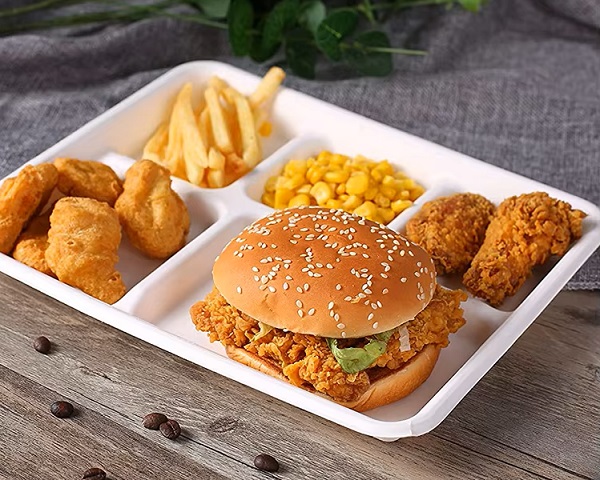
PFAS-free bagasse food containers are especially relevant for buyers serving markets where packaging standards are strict or customer expectations are high.
Restaurants and food chains may use them to support sustainability goals and reduce concern around fluorinated chemicals. Food packaging distributors may add PFAS-free options to serve customers who ask for compliant compostable packaging. Importers may need them for tenders, retail programs or regional requirements. Private-label packaging brands may use PFAS-free specifications as part of a cleaner product positioning.
Common applications include:
Takeout rice and noodle boxes
Burger and sandwich clamshells
Divided meal containers
Salad and deli containers
Catering trays
Meal prep packaging
Supermarket ready-meal packaging
Food truck and event packaging
For oily or sauced food, buyers should be especially specific about performance expectations. A PFAS-free container can be a strong solution, but it must be selected and tested for the food it will actually hold.
Sumkoka supplies bagasse food containers, including clamshell boxes, burger boxes, bento boxes and divided takeaway containers. It also presents OEM/ODM support for custom bagasse tableware, including logo customization, mold customization and packaging customization.
For PFAS-free requirements, buyers should include the requirement in the inquiry. Sumkoka can discuss PFAS-free options when customers need them and help match the request with suitable bagasse container products.
To make the inquiry more efficient, send:
Target product type, such as clamshell box or divided container
Size or capacity
Target food application
Destination market
Estimated order quantity
Required documents or testing expectations
Custom logo or packaging requirements
Sample request
This gives the sales and technical team the context needed to recommend the right product option and quotation.
Zero added PFAS, 100% compostable
Not necessarily. Buyers should not assume every bagasse container is automatically PFAS-free. If your market or customer requires PFAS-free or no intentionally added PFAS packaging, state that requirement clearly when requesting samples or quotations.
Yes, PFAS-free bagasse containers can be designed for oil and water resistance, but performance depends on fiber quality, molding process, surface treatment, structure and actual food use. Buyers should test samples with hot, oily or sauced foods before bulk orders.
Depending on your market and customer requirements, you may request formulation statements, safety data information, fluorine-related testing, compostability documents or other food-contact documentation. Confirm the exact requirement before ordering because documentation needs vary by country, buyer and product.
It means PFAS are not deliberately added to the product formulation. This phrase is often used because trace findings can be affected by contamination, impurities or testing methods. The FDA notes that PFAS may occur as impurities or contaminants even when not intentionally used.
Tell Sumkoka that you need PFAS-free or no intentionally added PFAS bagasse food containers, then share your target market, food application, size, order quantity and document requirements. This helps the team recommend suitable options and samples.
PFAS-free bagasse food containers help buyers respond to changing food packaging expectations without giving up the practical benefits of molded fiber packaging. The key is to treat PFAS-free as a clear sourcing requirement, not a vague claim. Confirm the selected SKU, request available documents, test samples with real food and explain your market needs early. If PFAS-free packaging is required for your project, include it in your Sumkoka inquiry so the right option can be recommended.


